Are Faux Wood Blinds Worth the Cost for Humid Georgia?
May 1, 2026
Humidity changes how window treatments behave. In Athens, GA, warm air carries moisture most of the year, and that moisture works its way into cords, fabrics, finishes, and frames. Homeowners often discover that blinds which looked fine in a showroom begin to warp, fade, or stick after a few seasons.
That’s why faux wood blinds are so often recommended in the Southeast. They promise the look of real wood without the problems moisture creates. But that raises a practical question: are faux wood blinds actually worth the cost in a humid Georgia climate, or are they just a marketing compromise?
The answer depends on where they’re used, what they replace, and what homeowners expect over time.
How Humidity Affects Traditional Window Treatments
Moisture changes materials in predictable ways. Real wood absorbs humidity and expands. Fabrics trap moisture and collect mildew. Thin plastics soften under heat and sun.
In Athens homes, these effects show up as:
- Warped slats that no longer align
- Swollen frames that resist tilting
- Faded finishes on sun-facing windows
- Cords that stiffen or fray
- Sticky mechanisms in kitchens and baths
The problem is not neglect. It’s environment. Even well-maintained blinds degrade faster in warm, damp air.
Faux wood exists to remove that vulnerability.
What Faux Wood Blinds Are Designed to Do
Faux wood blinds are built from composite polymers rather than natural timber. They are molded, not milled. That difference changes how they age.
They are engineered to:
- Resist moisture absorption
- Maintain shape under heat
- Prevent swelling and splitting
- Hold color under UV exposure
- Clean easily without damage
They mimic the appearance of wood while behaving like a synthetic material. In humid regions, that tradeoff is functional, not cosmetic.
Where Faux Wood Blinds Deliver the Most Value
Faux wood blinds earn their cost in spaces where moisture and heat are unavoidable.
They perform best in:
- Kitchens with steam and temperature swings
- Bathrooms with frequent humidity spikes
- Laundry rooms and mudrooms
- Sun-heavy living spaces with large windows
- Homes without constant climate control
In these rooms, real wood blinds often require early replacement. Faux wood blinds continue functioning without distortion.
The value is not aesthetic. It is stability.
Where Faux Wood May Not Be the Best Choice
Faux wood is not ideal for every space.
It is less suitable when:
- Windows are extremely large, where weight matters
- Ultra-thin profiles are required
- Natural grain and texture are a design priority
- The space is fully climate-controlled year-round
In these environments, real wood or alternative materials may provide better proportion or appearance.
Faux wood is a solution, not a universal upgrade.
Cost Compared to Other Options
Faux wood blinds typically cost more than basic vinyl blinds but less than real wood.
In Athens homes, they usually sit in the middle of the pricing range:
- More durable than budget plastics
- Less expensive than hardwood treatments
- Longer lifespan than fabric-based blinds
Over time, that middle ground becomes efficient. Homeowners avoid repeated replacement while staying below the cost of premium materials.
The cost is not low. The replacement cycle is.
Performance Over Time in Georgia Homes
Faux wood blinds do not remain perfect forever, but they degrade predictably.
Instead of warping, they may:
- Show surface wear
- Accumulate dust in grain patterns
- Require cord or tilt replacement after many years
They rarely fail structurally. Panels stay straight. Frames remain square. Mechanisms stay aligned.
In humid Georgia homes, that stability is the difference between “aging” and “failing.”
A Practical Evaluation Flow
Use this sequence to determine whether faux wood makes sense in your home:
- Are these blinds going into kitchens, baths, or sun-heavy rooms?
- Does the space experience regular humidity changes?
- Have past blinds warped or discolored in this room?
- Is durability more important than natural grain?
- Would you rather replace once than repeatedly?
The more “yes” answers, the more faux wood shifts from alternative to advantage.
Frequently Asked Questions
Do faux wood blinds look artificial?
Modern composites replicate wood grain convincingly. At typical viewing distance, they are visually similar.
Are faux wood blinds heavier than real wood?
Yes. Weight can be a factor for very wide windows.
Do they fade in sunlight?
Quality faux wood resists UV discoloration far better than painted wood.
Are they safe for bathrooms?
Yes. They are designed for high-moisture environments.
Can they be cut for custom windows?
Yes. Faux wood blinds are custom-sized just like wood.
Final Thoughts
In humid Georgia homes, window treatments are not judged by how they look on day one. They are judged by how they behave in year five.
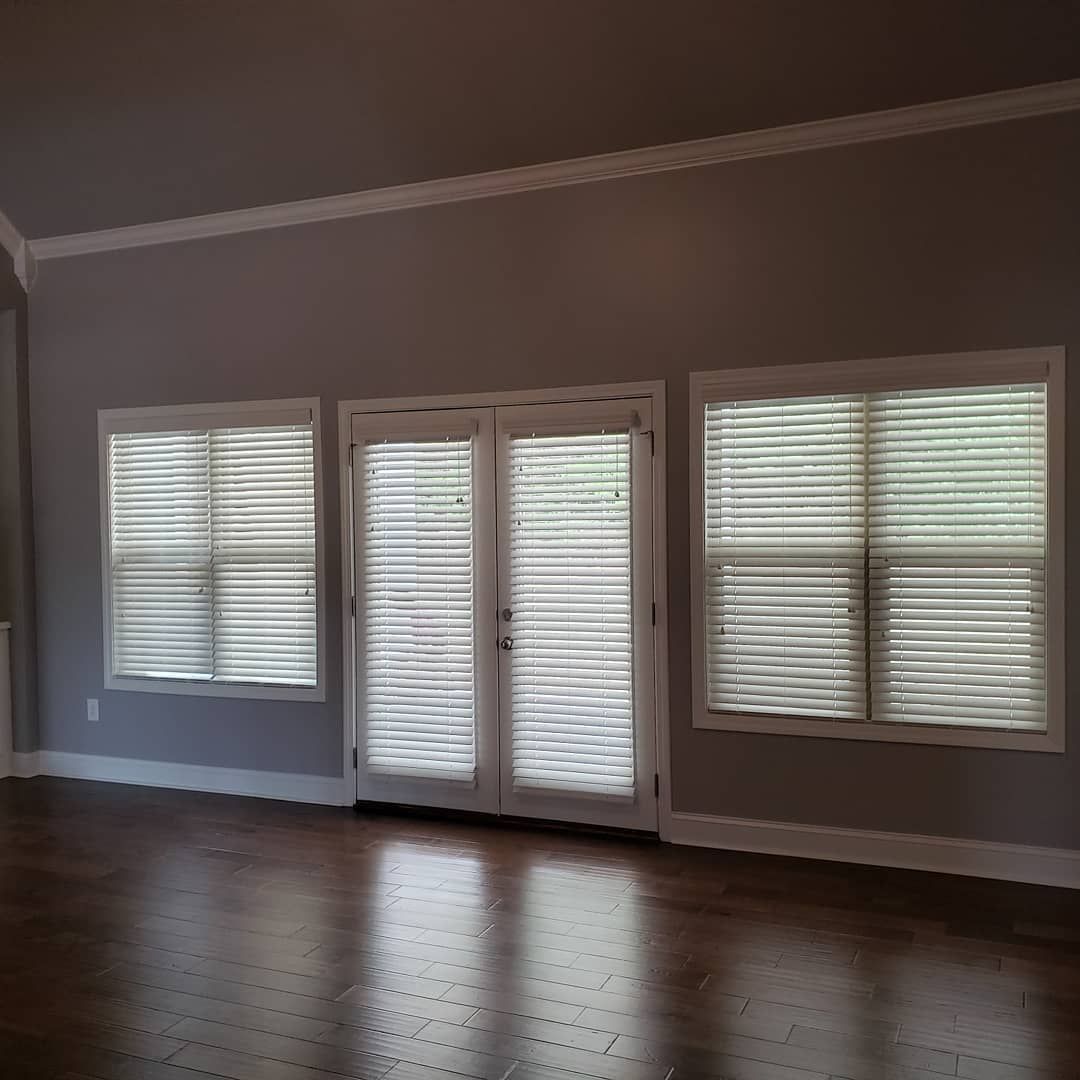
Faux wood blinds are not a compromise. They are a response to environment. They trade organic texture for dimensional stability, resisting the swelling, warping, and premature failure that moisture creates.
For Athens homeowners who want wood-style blinds without climate-driven replacement cycles, faux wood often proves to be the most practical long-term choice.
Southern Shutters and Blinds helps homeowners evaluate where faux wood delivers real value and where other materials make more sense—so each room receives a solution built for how it actually lives.