Can Sunroom Shades Help Keep Athens Homes Cooler?
May 18, 2026
Sunrooms Can Become the Hottest Room in the House
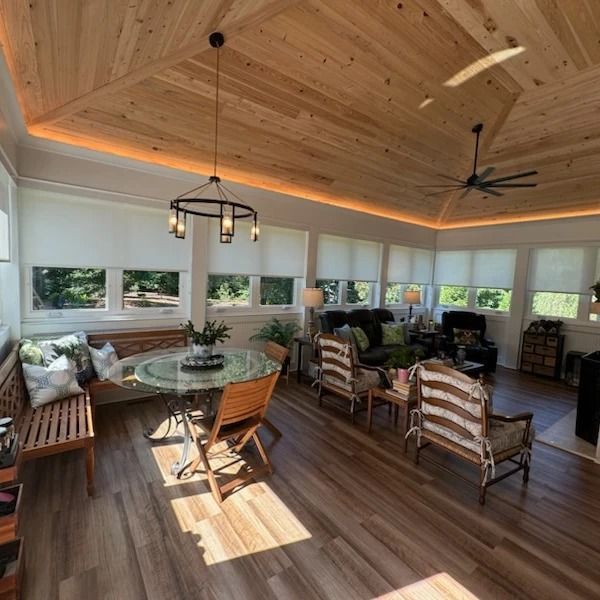
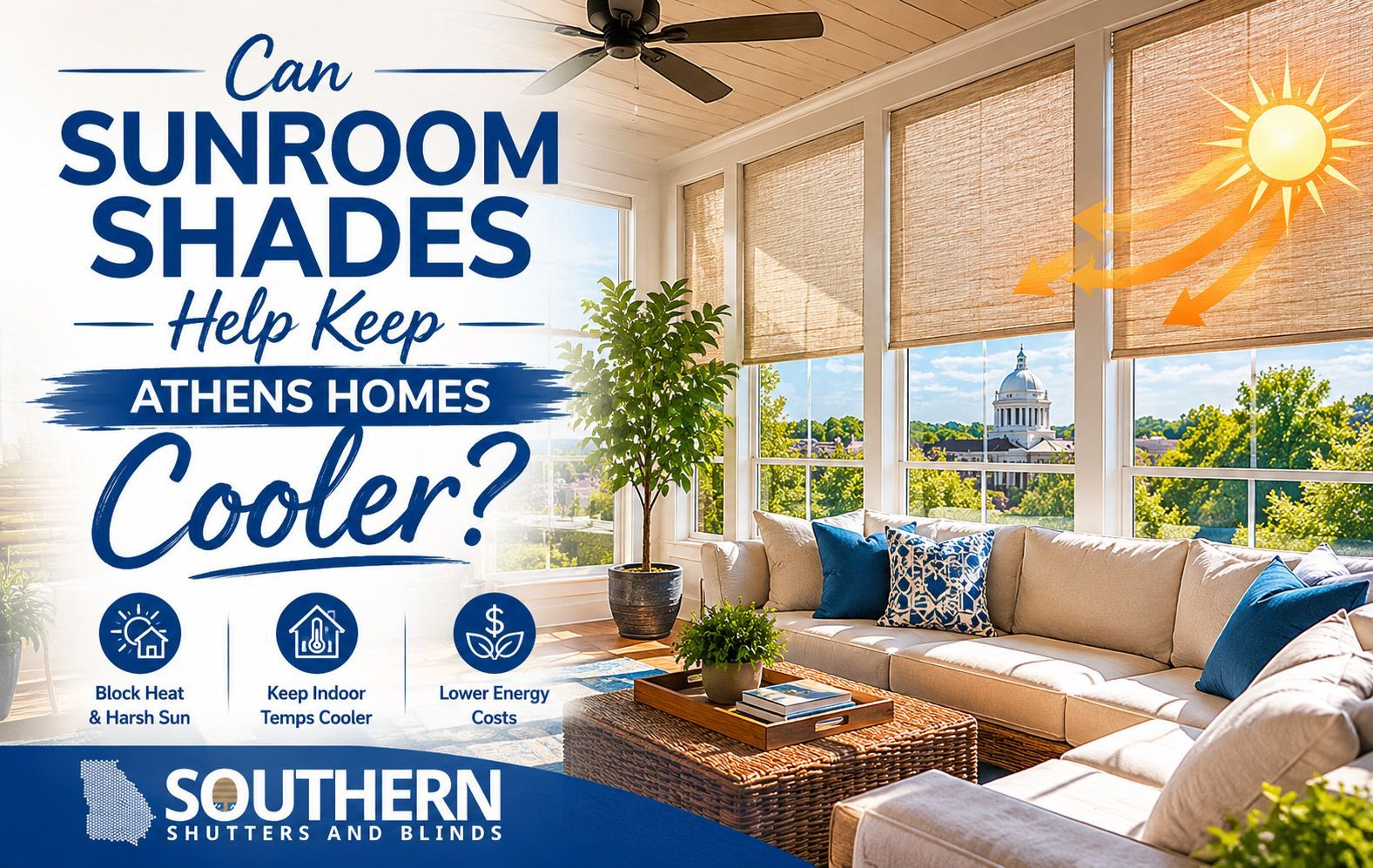
A sunroom may feel perfect during mild mornings or cooler months, but once summer arrives in Athens, Georgia, the space can heat up fast. Large windows that make the room bright and open also allow significant solar heat to enter throughout the day. By midafternoon, some sunrooms become noticeably warmer than the rest of the home even when the air conditioning is running constantly.
That problem becomes more obvious in homes with:
- West-facing sunrooms
- Large uncovered windows
- Older glass
- Limited airflow
- Dark flooring or furniture
- Vaulted ceilings
Many homeowners initially try temporary fixes like portable fans or blackout curtains, only to realize the room either stays too hot or becomes too dark to enjoy properly.
Sunroom shades are often installed because they help manage sunlight differently. Instead of completely shutting out the room, they can reduce glare, soften heat buildup, and improve comfort while still preserving much of the natural light that makes the space appealing in the first place.
Why Sunrooms Heat Up Faster Than Other Rooms
Most sunrooms contain far more glass exposure than traditional living spaces.
Large Windows Bring in Solar Heat
Sunlight entering through glass does more than brighten the room. It also transfers heat into the interior space.
In Athens, Georgia, intense afternoon sun can quickly raise indoor temperatures, especially during long summer periods with high humidity.
Sunrooms often experience heat buildup because they contain:
| Common Sunroom Feature | How It Increases Heat |
|---|---|
| Expansive windows | Allows more direct sunlight |
| Glass doors | Adds additional heat exposure |
| Limited insulation | Reduces temperature control |
| Southern or western exposure | Increases afternoon heat |
| Minimal shade outside | Allows stronger solar gain |
Even modern HVAC systems may struggle to cool heavily sun-exposed sunrooms efficiently during peak summer hours.
Heat Becomes Trapped Inside the Space
Many sunrooms have fewer vents or weaker airflow compared to the main areas of the home.
Once sunlight heats the room, warm air can linger longer, making the space feel uncomfortable even after the outdoor temperature starts cooling down later in the evening.
That trapped heat is one reason many Athens homeowners begin looking into specialized window treatments rather than relying solely on air conditioning.
Sunroom Shades Help Reduce Direct Solar Exposure
Window shades cannot completely eliminate heat, but they can help reduce how much solar energy enters the room.
They Filter Sunlight Before It Spreads Through the Room
When sunlight passes through uncovered windows, it heats:
- Floors
- Furniture
- Walls
- Upholstery
- Decorative surfaces
Those materials then continue releasing heat into the room throughout the day.
Sunroom shades help reduce that process by limiting the intensity of direct sunlight entering the space.
Some shades are designed specifically to diffuse light while still allowing visibility and brightness.
Light Control Helps Maintain Comfort
One of the biggest advantages of shades over heavier coverings is flexibility.
Homeowners can adjust shades throughout the day depending on:
- Sun position
- Outdoor temperature
- Desired brightness
- Privacy needs
This allows better control over comfort without making the room feel completely enclosed.
Different Shade Styles Affect Cooling Performance
Not every sunroom shade performs the same way in hot weather.
Solar Shades Are Designed for Light Filtering
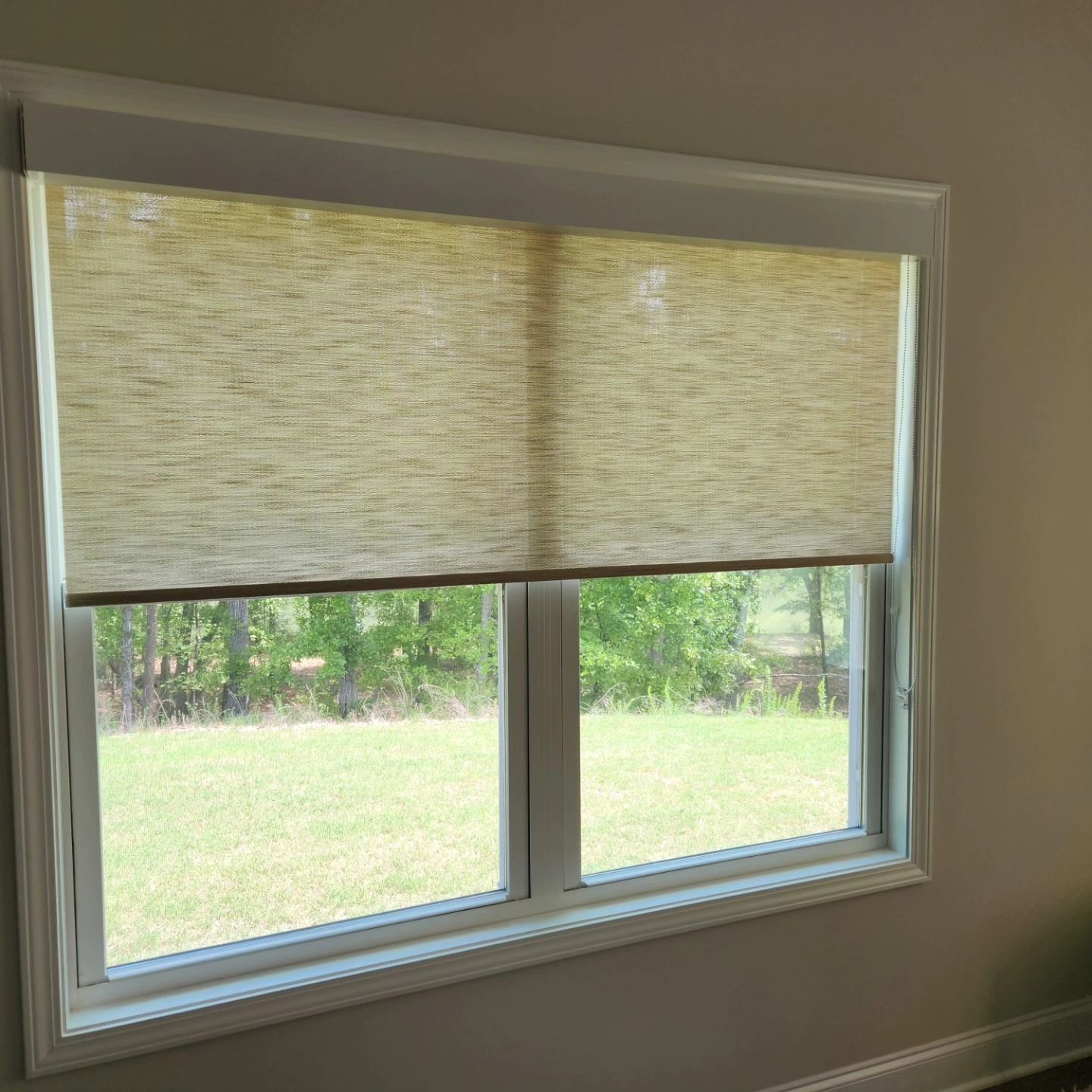
Solar shades are popular in Athens homes because they reduce glare and filter sunlight without fully blocking outdoor views.
They help:
- Soften harsh sunlight
- Reduce heat buildup
- Maintain visibility
- Improve daytime comfort
The openness factor of the material affects how much light and heat pass through the fabric.
Cellular Shades Add Insulation
Cellular shades are built with honeycomb-shaped pockets that trap air inside the material.
That structure can help reduce heat transfer through windows, especially during both hot summers and cooler winter periods.
Homeowners often choose cellular shades when energy efficiency becomes a larger priority.
Layered Treatments Provide More Flexibility
Some homeowners combine multiple window treatments for greater control throughout the day.
For example:
- Solar shades for daytime filtering
- Drapery panels for evening insulation
- Motorized systems for large sunroom windows
Layering treatments can improve both comfort and appearance in larger sunroom spaces.
Sunroom Orientation Matters in Athens, Georgia
The direction the sunroom faces often affects how severe the heat problem becomes.
West-Facing Sunrooms Usually Get the Most Afternoon Heat
In Athens, western exposure can create intense late-day heat buildup during summer.
These sunrooms often experience:
- Strong glare
- Hot flooring surfaces
- Increased AC demand
- Uncomfortable evening temperatures
Homeowners with west-facing rooms frequently prioritize stronger light filtering or more adjustable shading systems.
South-Facing Rooms Receive Long Daily Exposure
South-facing sunrooms may collect sunlight consistently throughout the day.
While this can make the room feel bright and inviting, it may also increase indoor temperatures steadily over time if the windows remain uncovered.
Trees and Exterior Shade Affect Performance
Homes with mature landscaping may experience less direct solar exposure than properties with fully open sunroom walls.
That changes how aggressive the shade system needs to be for effective cooling support.
Motorized Shades Are Popular for Large Sunrooms
Many sunrooms contain tall or hard-to-reach windows that are difficult to adjust manually throughout the day.
Automated Adjustments Improve Light Control
Motorized shades allow homeowners to adjust sunlight exposure more consistently without needing to manually reposition multiple shades throughout the room.
This becomes especially useful for:
- Tall window walls
- Vaulted ceilings
- Large patio-style sunrooms
- Multi-window configurations
Consistent Shade Use Helps Manage Heat Better
Many homeowners stop adjusting manual shades regularly because it becomes inconvenient.
Motorized systems make it easier to keep shades positioned appropriately during peak sunlight hours, which may help improve overall comfort more consistently.
Shades Can Help Reduce Glare Along With Heat
Cooling is not the only issue homeowners face in sunrooms.
Strong sunlight can also create glare problems on:
- Televisions
- Phones
- Laptops
- Reading areas
- Flooring surfaces
Sunroom shades help soften harsh light while still preserving the open feel of the room.
That balance is important because most homeowners still want the sunroom to feel bright rather than heavily darkened.
What Homeowners Should Consider Before Choosing Sunroom Shades
The best shade setup often depends on how the room is used daily.
Think About Room Function
A sunroom used as:
- A reading area
- Dining space
- Home office
- Plant room
- Entertainment area
may require different levels of light control and insulation.
Consider Window Size
Large window expanses may benefit from motorized or layered systems simply because of scale and ease of adjustment.
Balance Visibility and Heat Control
Some homeowners prioritize preserving outdoor views, while others care more about maximum cooling support.
The right fabric and shade style usually depend on that balance.
Frequently Asked Questions About Sunroom Shades
Can sunroom shades actually help keep a room cooler?
They can help reduce direct solar heat entering through windows, which may improve comfort and reduce heat buildup.
Are solar shades good for sunrooms in Athens, Georgia?
Many homeowners choose solar shades because they filter harsh sunlight while still maintaining visibility and natural light.
Do cellular shades help with energy efficiency?
Yes. Cellular shades provide added insulation that may help reduce heat transfer through windows.
Are motorized shades worth it for sunrooms?
Motorized systems are often useful for large or hard-to-reach windows because they make daily light adjustment easier.
Will shades make a sunroom too dark?
Not necessarily. Many modern shade fabrics are designed to diffuse sunlight while still allowing the room to feel bright and open.
Conclusion
Sunroom shades can help Athens homeowners manage heat buildup by reducing direct sunlight, softening glare, and improving overall comfort throughout the day. While the effectiveness depends on window size, room orientation, and shade type, properly selected window treatments often make sunrooms more usable during Georgia’s hotter months.
For homes with large glass exposure and strong afternoon sunlight, thoughtful shade solutions can improve both comfort and energy performance without sacrificing natural light. Companies like Southern Shutters and Blinds help homeowners explore sunroom shade options designed for light control, functionality, and long-term comfort in Athens, Georgia homes.